Ayatul Kursi in Arabic
Here is the complete and beautiful Ayatul Kursi in Arabic:
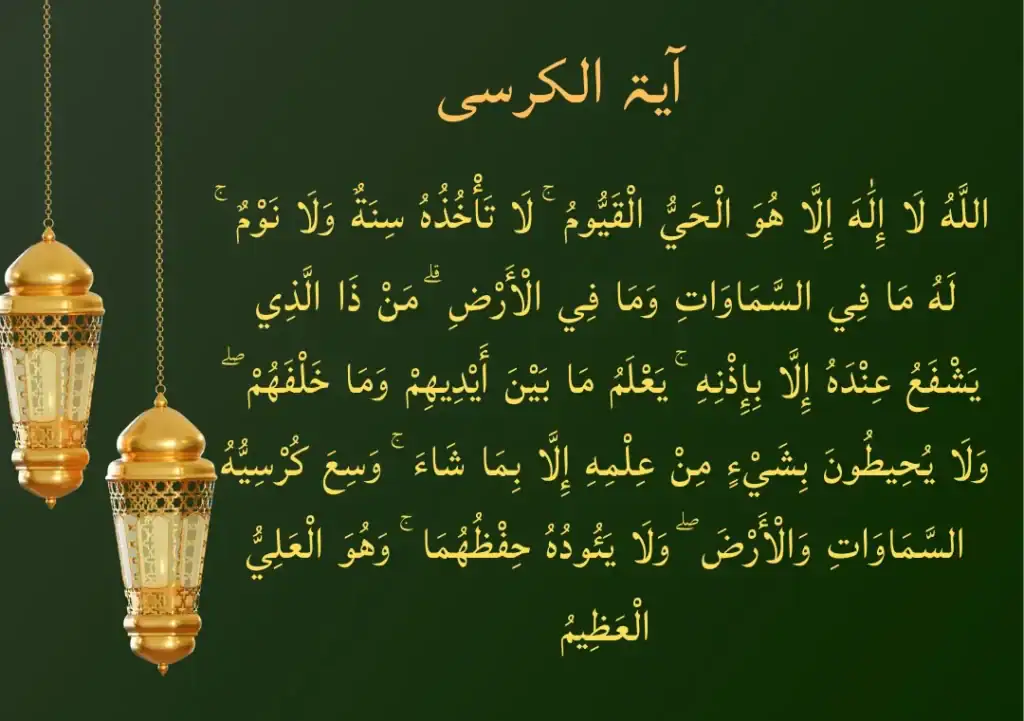
اللَّهُ لَا إِلَٰهَ إِلَّا هُوَ الْحَيُّ الْقَيُّومُ ۚ لَا تَأْخُذُهُ سِنَةٌ وَلَا نَوْمٌ ۚ لَهُ مَا فِي السَّمَاوَاتِ وَمَا فِي الْأَرْضِ ۗ مَنْ ذَا الَّذِي يَشْفَعُ عِنْدَهُ إِلَّا بِإِذْنِهِ ۚ يَعْلَمُ مَا بَيْنَ أَيْدِيهِمْ وَمَا خَلْفَهُمْ ۖ وَلَا يُحِيطُونَ بِشَيْءٍ مِنْ عِلْمِهِ إِلَّا بِمَا شَاءَ ۚ وَسِعَ كُرْسِيُّهُ السَّمَاوَاتِ وَالْأَرْضَ ۖ وَلَا يَئُودُهُ حِفْظُهُمَا ۚ وَهُوَ الْعَلِيُّ الْعَظِيمُ
Ayat ul Kursi in Roman English
If you are learning how to pronounce the Arabic text correctly, here is the full Ayat ul Kursi in Roman English transliteration:
Allahula ilaha illa Huwal Hayyul Qayyum. La ta’khuzuhu sinatun wa la nawm. Lahu ma fis samawati wa ma fil ard. Man zallazi yashfa’u ‘indahu illa bi iznih. Ya’lamu ma bayna aydihim wa ma khalfahum, wa la yuhituna bishai’im min ‘ilmihi illa bima sha’a. Wasi’a kursiyyuhus samawati wal ard, wa la ya’uduhu hifzuhuma, wa Huwal ‘Aliyyul ‘Azeem.
Translation of Ayat ul Kursi in English
Here is the full translation of Ayat ul Kursi in English for a clearer understanding of its powerful message:
“Allah! There is no deity except Him, the Ever-Living, the Sustainer of all existence. Neither drowsiness overtakes Him nor sleep. To Him belongs whatever is in the heavens and whatever is on the earth. Who is it that can intercede with Him except by His permission? He knows what is before them and what will be after them, and they encompass not a thing of His knowledge except for what He wills. His Kursi extends over the heavens and the earth, and their preservation tires Him not. And He is the Most High, the Most Great.”

Urdu Translation of Ayat ul Kursi (Tarjuma)
For readers seeking Ayat ul Kursi in Urdu language, here is the authentic Ayat ul Kursi tarjuma:
اللہ! اس کے سوا کوئی معبود نہیں، وہ زندہ ہے اور سب کو قائم رکھنے والا ہے۔ نہ اس کو اونگھ آتی ہے نہ نیند۔ جو کچھ آسمانوں میں ہے اور جو کچھ زمین میں ہے سب اسی کا ہے۔ کون ہے جو اس کی اجازت کے بغیر اس کے حضور سفارش کر سکے؟ جو کچھ لوگوں کے سامنے ہے اور جو کچھ ان کے پیچھے ہے وہ سب جانتا ہے، اور وہ اس کے علم میں سے کسی چیز کا احاطہ نہیں کر سکتے مگر جتنا وہ چاہے۔ اس کی کرسی آسمانوں اور زمین کو گھیرے ہوئے ہے، اور ان دونوں کی حفاظت اس پر گراں نہیں گزرتی، اور وہی سب سے بلند، عظمت والا ہے۔
Ayat ul Kursi Bangla
Bangla speaking readers looking for Ayat ul Kursi Bangla translation can easily read and learn Ayat ul Kursi Bangla below.
আল্লাহ্ ছাড়া অন্য কোন উপাস্য নেই, তিনি চিরঞ্জীব, সবকিছুর ধারক। তাঁকে তন্দ্রাও স্পর্শ করতে পারে না এবং নিদ্রাও নয়। আকাশমন্ডলে ও ভূমন্ডলে যা কিছু রয়েছে সবই তাঁর। কে সে, যে তাঁর অনুমতি ছাড়া তাঁর কাছে সুপারিশ করবে? তাঁদের সামনে ও পেছনে যা কিছু আছে তা তিনি জানেন। আর তাঁর জ্ঞানের কোন কিছুকেই তারা পরিবেষ্টন করতে পারে না, তবে তিনি যতটুকু ইচ্ছা করেন তা ছাড়া। তাঁর কুরসী আকাশ ও পৃথিবী ব্যাপ্ত করে আছে এবং এদের রক্ষণাবেক্ষণ তাঁকে ক্লান্ত করে না। আর তিনি সর্বোচ্চ, মহা-মহিমান্বিত
Ayatul Kursi Importance
Ayat ul Kursi is the most powerful verse in the Holy Quran.This sacred verse is found in Surah Al-Baqarah Ayat 255 of the Quran’s second chapter and has immense spiritual significance to millions of Muslims all over the world People frequently recite it daily for divine protection, peace of heart, and continuous blessings.
Whether you are looking for Ayat ul Kursi in Arabic text, its English translation, Roman English transliteration, or Urdu tarjuma, this detailed guide covers everything you need to know about its meaning, location in the Quran, and unique virtues.
What is Ayat ul Kursi and Where is it in the Quran?
Many learners often ask about the exact location of Ayat ul Kursi in Quranic scripture.
Although many people search for surah ayatul kursi, it is important to remember that Ayat ul Kursi is not an independent Surah. It is a single, magnificent verse within Surah Al-Baqarah that completely highlights the absolute power, sovereignty, and supreme authority of Allah.
What is the Main Theme of Ayat ul Kursi?
Understanding the main theme of Ayat ul Kursi helps you connect with its deep spiritual essence. The verse focuses entirely on the concept of Tawheed (the Oneness of God).
It explains five fundamental truths about Allah:
Benefits of Ayat ul Kursi
The benefits of Ayat ul Kursi are well-documented in authentic Hadith collections. Here are the primary reasons why this verse holds such incredible value in daily Islamic practices:
1. Reciting Ayatul Kursi After Salah (Farz Namaz)
One of the most famous Hadiths states that reciting Ayatul Kursi after prayer opens the doors to Paradise. Prophet Muhammad (peace be upon him) said that anyone who recites Ayatul Kursi after every obligatory prayer, nothing stands between that person and Paradise except death.
2. Powerful Protection at Night
Reciting Ayatul Kursi at night before sleeping acts as a spiritual shield. According to Sahih Bukhari, when you recite this verse before going to bed, Allah appoints a guardian angel over you, and no evil or devil can approach you until morning.
3. Shield Against Evil
Many believers recite Ayat ul Kursi daily to keep away negative energy, evil eye, and distress. It brings continuous peace, safety, and blessings into the home.
Related Islamic Duas & Articles
FAQs
Why is Ayatul Kursi so powerful?
Ayatul Kursi is considered the greatest verse in the Quran because it directly describes the attributes, majesty, power, and ultimate authority of Allah without mentioning human weaknesses.
Is Ayat ul Kursi a full Surah?
No, it is not a full Surah. It is a single verse (Verse 255) located within Surah Al-Baqarah.
In which Para is Ayat ul Kursi located?
Ayat ul Kursi is located at the very beginning of the 3rd Para (Juz) of the Holy Quran.
Can I recite Ayatul Kursi in Bangla, Hindi, or English instead of Arabic?
While reading Ayatul Kursi in Bangla, Hindi, or English helps you understand its meaning, the actual recitation during prayers or spiritual practice should ideally be done in Arabic to preserve the original divine words.
Conclusion
Ayat ul Kursi is a divine blessing that offers protection, immense rewards, and spiritual strength. By reading its text daily, reflecting on its English and Urdu translations, and reciting it after every Farz namaz and before sleep, you can invite continuous peace and security into your life.