Dua after Wudu/Wazu ki Dua in Arabic
Narrated by Umar bin Al-Khattab that Prophet Muhammad(ﷺ) said:
“Whoever performs Wudu and does it effectively, then says,
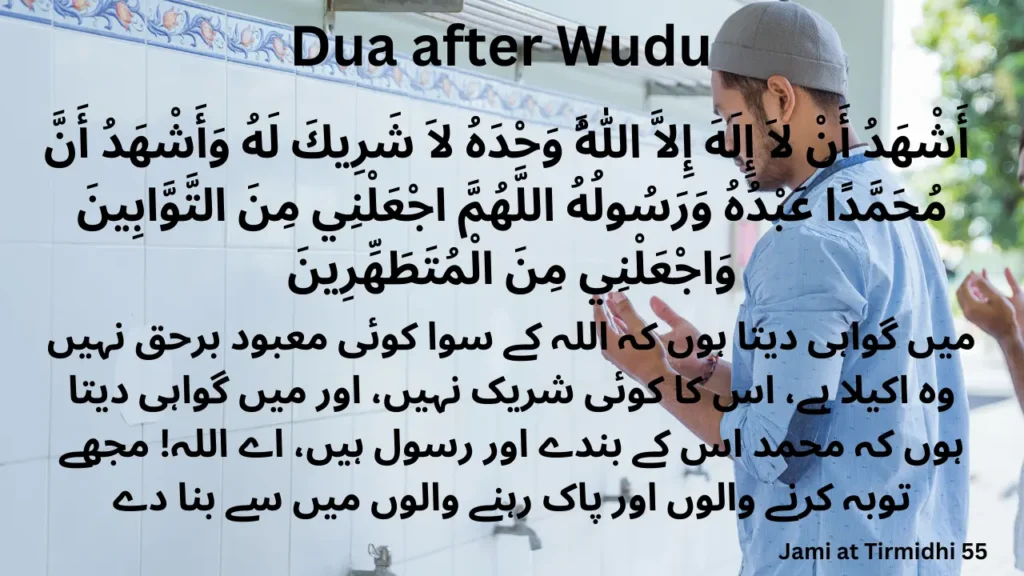
أَشْهَدُ أَنْ لاَ إِلَهَ إِلاَّ اللَّهُ وَحْدَهُ لاَ شَرِيكَ لَهُ وَأَشْهَدُ أَنَّ مُحَمَّدًا عَبْدُهُ وَرَسُولُهُ اللَّهُمَّ اجْعَلْنِي مِنَ التَّوَّابِينَ وَاجْعَلْنِي مِنَ الْمُتَطَهِّرِينَ
Eight gates to Paradise are then unlocked for him, that may enter by whichever of them wishes.”
Reference: Jami at Tirmidhi 55
Dua after Wudu/Wazu ki Dua in English
I witness that there are no partners for Allah; He alone is deserving of worship and I witness that Muhammad(ﷺ) is God’s servant and Messenger, Oh Allah! Please include myself among the penitent, and make me among those who purify themselves.

Dua after Wudu/Wazu ki Dua in Urdu
میں گواہی دیتا ہوں کہ اللہ کے سوا کوئی معبود برحق نہیں وہ اکیلا ہے، اس کا کوئی شریک نہیں، اور میں گواہی دیتا ہوں کہ محمد اس کے بندے اور رسول ہیں، اے اللہ! مجھے توبہ کرنے والوں اور پاک رہنے والوں میں سے بنا دے
How to do Wudu/Wazu Karne ka Tarika
Wudu, also known as ablution, is a purification process performed by Muslims before daily prayers. It involves cleansing specific parts of the body in order to prepare oneself for prayer.
Before beginning ablution (wazu), make a sincere intention and ensure that the environment around you is pure. Then, start doing the process of ablution (wazu) as follows.
Farz of Wudu/Wazu ke Faraiz
There are 4 farz(fardh) of wudu. These are the obligatory actions in wudu (ablution). Without these actions, wudu is not considered complete. These obligatory actions are as follows:
Sunnah of Wudu/Wazu ki Sunnat
In addition to the farz of wudu (ablution) in Islam, there are several virtuous actions known as “Sunnah” actions that are recommended to perform during wudu. Here are the Sunnah actions of wudu:
Common Mistakes in Wudu
Here are some common mistakes in wudu that people may make while performing wudu.
Muslims need to learn the exact method of performing wudu and avoid these common mistakes to ensure the validity of wudu and the acceptance of prayers.
Also Read: Dua for Rizq/ Rizq ki Dua
Benefits of Dua after Wudu/Wazu ki Dua ki Fazilat
In Islam, reciting a Dua after wudu (ablution) has a special meaning and offers several benefits. Forgiveness for minor sins is one of the primary benefits. When a person completes wudu and recites the dua of wudu, it is believed that whatever minor sins they may have done are forgiven.
Wudu involves a process of physical and spiritual purification. Reciting the dua after wudu allows a person to reach a state of ritual purity, which will allow them to have a deeper connection with Allah in their prayers.
Dua after wudu(wazu ki dua) is a way to thank Allah for his gift of cleanliness and purity. Reciting the dua regularly after Wudu reinforces a person’s faith and commitment to their religious obligations.
FAQs
What is wudu?
Wudu is a way of purification in Islam. It involves washing certain parts of the body before performing acts of worship like prayer.
What breaks wudu?
The following things break wudu:
Urinating
Defecating
Passing air
Menstruation
Postpartum bleeding
Sexual Intercourse
Deep Sleep
Losing consciousness
Vomiting
Does touching private areas with the hand break wudu?
No, touching the private parts does not break wudu. However, it is discouraged. It is advised to wash your hands before praying if you touch the private parts without any barrier.
Can I offer multiple prayers with a single wudu?
You can offer as many prayers as you want. You do not have to repeat your wudu if you have maintained it since the previous prayer.
Does changing clothes break wudu?
Changing clothes does not break wudu as long as you have not engaged in any activity that would otherwise nullify your wudu.
Is it obligatory to make dua after every wudu?
Making dua after wudu is not obligatory, but it is a recommended practice. Dua after wudu(wazu ki dua) is highly encouraged in Islam.