Dua after Azan/Azan ke Baad ki Dua in Arabic
Jabir bin Abdullah narrated: the Prophet of Allah(ﷺ) said,
“After hearing the Azan, those who says,
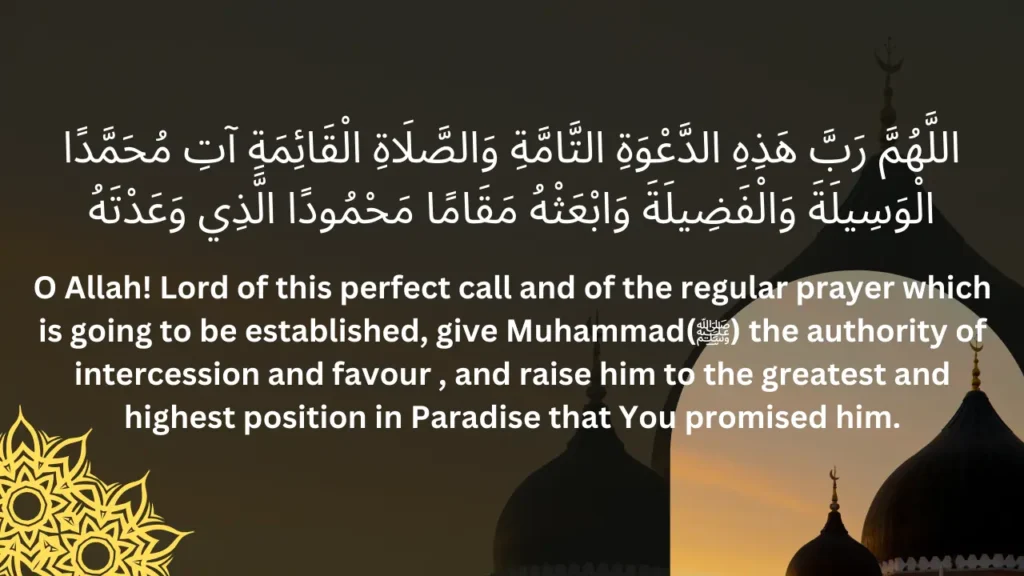
اللَّهُمَّ رَبَّ هَذِهِ الدَّعْوَةِ التَّامَّةِ وَالصَّلَاةِ الْقَائِمَةِ آتِ مُحَمَّدًا الْوَسِيلَةَ وَالْفَضِيلَةَ وَابْعَثْهُ مَقَامًا مَحْمُودًا الَّذِي وَعَدْتَهُ
My intercession will be accepted for him on the day of resurrection.”
Reference: Sahih Bukhari 614
Azan kay Baad ki Dua/Dua after Azan in English
O Allah! Lord of this perfect call and of the regular prayer which is going to be established, give Muhammad(ﷺ) the authority of intercession and illustriousness, and raise him to the greatest and highest position in Paradise that You promised him.
Dua after Azan/Azan ki Dua in Urdu
یااللہ !اس کامل اعلان اور قائم ہونے والی نماز کے مالک،محمد(ﷺ) کو مقامِ وسیلہ عطا فرما اور ان کی فضیلت میں اضافہ فرما اور ان کو مقامِ محمود پر پہنچا جس کا تو نے ان سے وعدہ کیا ہے ۔

Purpose of the Dua after Azan
Dua after Azan is a supplication recited after Azan (call to prayer). It is a recommended sunnah of Prophet Muhammad (ﷺ). This dua is an important part of prayers in Islam and should be repeated whenever Muslims hear Azan (call to prayer).
The purpose of this dua is to seek the pleasure of Allah and attain the support of Prophet Muhammad(ﷺ). The objective of this dua is to obtain the Prophet’s (ﷺ) intercession in the Hereafter. This supplication is a means of expressing love and affection for Allah and His Messenger.
The main objective of this dua is to praise and seek blessings upon the Prophet Muhammad(ﷺ). Azan ke baad ki dua is recited after Azan to seek Allah’s blessings and a special place in Paradise for the Prophet(ﷺ). This dua is a way to show love and reverence for the Prophet(ﷺ) and ask for Allah’s mercy.
Prophet Muhammad’s(ﷺ) Intercession
In Islamic theology, the concept of intercession(mediation) holds a significant place, and it is beautifully expressed in this dua. In Islam, intercession(mediation) is advocating for or asking forgiveness on behalf of others. It emphasizes Prophet Muhammad’s (ﷺ) special role as a mediator between Allah and humanity.
This dua is an appeal to Allah to grant the Prophet(ﷺ) the power to intercede on behalf of believers. He is also known as Shafi’ al-Mudhnibeen, the intercessor of sinners. It’s narrated that on the Day of Judgment, people would ask the Prophet to help alleviate their suffering and facilitate their entry into Paradise.
Benefits of Dua after Azan/Azan ke Baad ki Dua ke Fazilat
Azan ki dua holds significant virtues and rewards. This dua possesses great significance for Muslims who hear the Azan.
Azan ki dua is beneficial in getting your prayers accepted. Muslims use this dua to ensure that their prayers are offered most appropriately. This dua allows individuals to earn rewards for good deeds and invoke Allah’s blessings for their well-being in the Hereafter.
The dua is an expression of loyalty to Prophet Muhammad(ﷺ) and devotion to his teachings. It is a way to express adoration and reverence for the Prophet(ﷺ). This dua encourages the heart toward devotion and helps one become more aware of Allah (taqwa).
Also Read: Hajat ki Dua/Dua e Hajat
FAQs
When and where is the dua after the Azan recited?
Dua after Azan is recited immediately after hearing the Azan (call to prayer) in mosques. Muslims should make it their practice to repeat this dua every time they hear the Azan.
Is this obligatory to recite dua after azaan?
No, it is not obligatory to recite this dua. Rather, it’s a recommended practice. This dua is an expression of love and gratitude for Prophet Muhammad(ﷺ).
Are there any special intentions or etiquettes that should be followed before reciting this dua?
While there are no specific etiquettes or intentions, respect and sincerity are important when you recite this dua.
How does this dua show the deep love and respect Muslims feel for Prophet Muhammad?
This dua represents the profound love and respect that Muslims have for Prophet Muhammad(ﷺ). This dua reflects the Muslims’ recognition of Prophet Muhammad’s (ﷺ) exalted status and hope that he will intercede for them in Paradise.