Dua for Travelling/Safar ki Dua in Arabic
Narrated by Umm Salmah that whenever Prophet Muhammad (ﷺ) used to leave home, he would recite this dua,
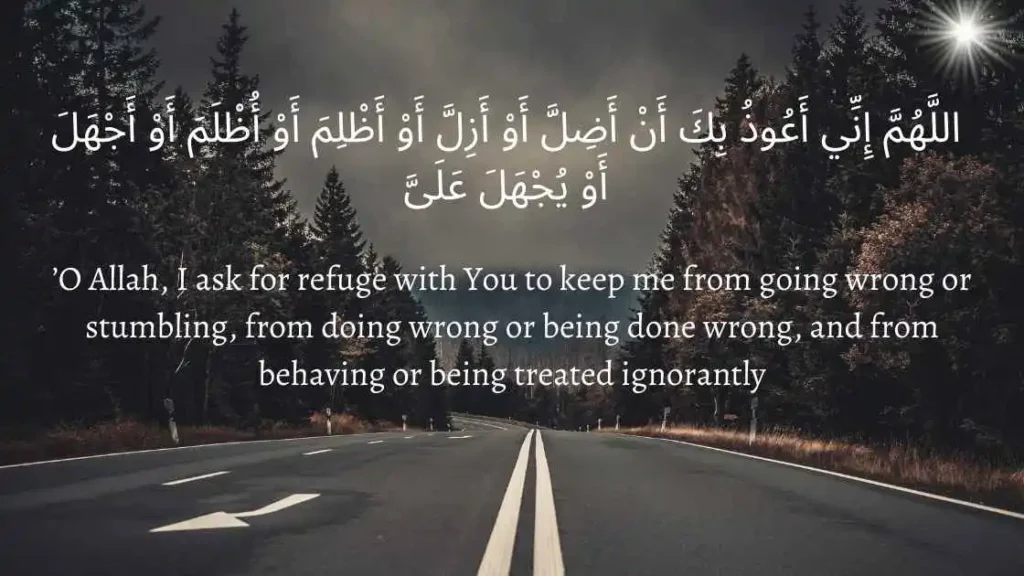
‘’اللَّهُمَّ إِنِّي أَعُوذُ بِكَ أَنْ أَضِلَّ أَوْ أَزِلَّ أَوْ أَظْلِمَ أَوْ أُظْلَمَ أَوْ أَجْهَلَ أَوْ يُجْهَلَ عَلَىَّ’’
‘’Allahumma inni a’udhu bika an adilla aw azilla, aw azlima aw uzlama, aw ajhala aw yujhala ‘alayya’’
Reference: Sunan ibn Majah 3884
Safar ki Dua in English
“O Allah, I ask for refuge with You to keep me from going wrong or stumbling, doing wrong or being done wrong, and behaving or being treated ignorantly.”
Safar ki Dua in Urdu
اے اللہ! میں تیری پناہ چاہتا ہوں اس بات سے کہ میں راہ بھٹک جاؤں یا پھسل جاؤں، یا کسی پر ظلم کروں، یا کوئی مجھ پر ظلم کرے، یا میں جہالت کروں، یا کوئی مجھ سے جہالت کرے
What is Travelling
Travelling refers to the act of physical movement from one location to another. It is done for a particular purpose like education, business, leisure, or other objectives.
Travelling exposes us to new ideas, perspectives, and experiences, allowing us to meet new people, explore different places, and experience different cultures around the world.
Travelling in Islam
Travelling is an essential part of Islam and can be considered a virtuous act. Travel offers many opportunities, whether it is to meet new people, learn about other cultures, or gain experience.
Muslims are encouraged by the Quran to travel in order to gain knowledge, experience spiritual growth, earn a legal livelihood, help fellow Muslims and engage in humanitarian service.
Travel in Islam can be undertaken to acquire knowledge, engage in trade, render service, attend religious gatherings, or fulfil other important objectives. For example, the pilgrimage of Hajj is an important journey for Muslims, which serves as a means of spiritual, moral, and social growth.
Travelling also strengthens our belief in our Creator as Allah mentions in the Quran:
قُلْ سِيرُوا۟ فِى ٱلْأَرْضِ فَٱنظُرُوا۟ كَيْفَ بَدَأَ ٱلْخَلْقَ ۚ ثُمَّ ٱللَّهُ يُنشِئُ ٱلنَّشْأَةَ ٱلْـَٔاخِرَةَ ۚ إِنَّ ٱللَّهَ عَلَىٰ كُلِّ شَىْءٍ قَدِير
Say (O Muhammad), Travel throughout the land and see how He originated the creation, then Allah will bring it into being one more time. Surely Allah is Most Capable of everything.
کہو کہ : ذرا زمین میں چل پھر کر دیکھو کہ اللہ نے کس طرح مخلوق کو شروع میں پیدا کیا، پھر اللہ ہی آخرت والی مخلوق کو بھی اٹھا کھڑا کرے گا۔ یقینا اللہ ہر چیز پر قادر ہے
(Surah Al-Ankabut, 29:20)
Travelling Sunnah and Rulings in Islam
When Prophet Muhammad travelled, he followed simple habits to make his trip more rewarding and closer to Allah.
1. Reciting Important Dua’s Before Travelling
You can say several duas for travelling and beginning your journey. Ask Allah Almighty to bless you, protect you, and take care of your soul.
Dua for Leaving Home
Anas ibn Maalik (رضي الله عنه) narrated : Prophet Muhammad (ﷺ) said,
Whoever says upon leaving his house,
بِسْمِ اللّٰهِ، تَوَكَّلْتُ عَلَى اللّٰهِ، وَلَا حَوْلَ وَلَا قُوَّةَ إِلَّا بِاللّٰه
In the Name of Allah, I have placed my trust in Allah; there is no might and no power except by Allah.
اللہ کے نام سے نکل رہا ہوں، میرا پورا پورا توکل اللہ ہی پر ہے، تمام طاقت و قوت اللہ ہی کی طرف سے ہے
it will be said to him: ‘You are guided, defended and protected.’ The devil will go far away from him.”
Reference: Abu Dawud 5095
Dua When Boarding a Vehicle
Our Prophet Muhammad (ﷺ) recommended reciting this dua before riding on any means of transport;
سُـبْحانَ الّذي سَخَّـرَ لَنا هذا وَما كُنّا لَهُ مُقْـرِنين، وَإِنّا إِلى رَبِّنا لَمُنـقَلِبون
Glory is to Him Who has provided this for us though we could never have had it by our efforts. Surely, unto our Lord, we are returning.
پاکی ہے اسے جس نے اس سواری کو ہمارے بس میں کردیااور ہم میں طاقت نہ تھی کہ اس کو بس میں کرلیتے.
Reference: Abu Dawud 2602
Dua for Travelling
Abdullah bin Sarjis narrated that when the Messenger of Allah (ﷺ) used to embark on a journey, he would recite the following dua,
‘اللَّهُمَّ إِنِّي أَعُوذُ بِكَ مِنْ وَعْثَاءِ السَّفَرِ، وَكَآبَةِ الْمُنْقَلَبِ، وَالْحَوْرِ بَعْدَ الْكَوْرِ، وَدَعْوَةِ الْمَظْلُومِ، وَسُوءِ الْمَنْظَرِ فِي الْأَهْلِ وَالْمَالِ
O Allah, I seek refuge in You from the difficulties of travelling and the sorrows that accompany the return, the decrease after increase, from the prayers of those who have been wronged and seeing some calamity befall my family or property.
اے اللہ! میں تیری پناہ چاہتا ہوں سفر کی صعوبتوں اور مشقتوں سے، واپسی کے غم سے، ترقی کے بعد تنزلی سے، اور مظلوم کی بد دعا سے اور اہل و عیال کے سلسلے میں برا منظر دیکھنے سے
Another narrator Abu Muawiyah added: “And when they returned, he said the same thing.’’
Reference: Sunan Ibn Majah 3888
2. Keeping Good Company
Travelling alone or solo travelling is discouraged by our Prophet Muhammad (ﷺ). Although a person spends time alone to meditate, worship, and gain spirituality. But being alone all the time is against the principles of Islam.
Narrated by Ibn Umar, that Prophet (ﷺ) said,
لَوْ يَعْلَمُ النَّاسُ مَا فِي الْوَحْدَةِ مَا أَعْلَمُ مَا سَارَ رَاكِبٌ بِلَيْلٍ وَحْدَهُ
If the people knew what I know about travelling alone, then nobody would travel alone at night.
جتنا میں جانتا ہوں ، اگر لوگوں کو بھی اکیلے سفر ( کی برائیوں ) کے متعلق اتنا علم ہوتا تو کوئی سوار رات میں اکیلا سفر نہ کرتا.
Reference: Sahih al-Bukhari 2998
Instead, to travel in the company of honest and pious individuals who will encourage positive behaviour, remind one another of Allah, and help maintain a peaceful and righteous environment during the journey is recommended.
Amr bin Shu’aib (رضي الله عنه) narrated; The Prophet of Allah (ﷺ) said,
الراكب شيطان والراكبان شيطانان والثلاثة ركب
A single rider is (accompanied by) Satan, and two riders are (accompanied by) two Satans. Three riders form a group.
ایک سواری شیطان ہے دو سواریاں دو شیطان ہیں اور تین سواریاں قافلہ ہے
Reference: Sunan at Tirmidhi 1674
3. Saying Goodbye with Prayers
When bidding farewell to family, friends, and loved ones, it is recommended to ask forgiveness and offer prayers for their safety and protection.
Narrated by Ibn Abbas;
The Prophet (ﷺ) used to seek Refuge with Allah for Al-Hasan and Al-Husain and say,
Your forefather (i.e. Abraham) used to seek Refuge with Allah for Ishmael and Isaac by reciting the following.
أَعُوذُ بِكَلِمَاتِ اللَّهِ التَّامَّةِ مِنْ كُلِّ شَيْطَانٍ وَهَامَّةٍ، وَمِنْ كُلِّ عَيْنٍ لاَمَّةٍ
O Allah! I seek Refuge with Your Perfect Words from every devil and from poisonous pests and from every evil, harmful, envious eye.
میں پناہ مانگتا ہوں اللہ کے پورے پورے کلمات کے ذریعہ ہر ایک شیطان سے اور ہر زہریلے جانور سے اور ہر نقصان پہنچانے والی نظر بد سے ۔
Reference: Sahih al-Bukhari 3371
4. Doing Dhikr and Tasbih
It’s suggested by Prophet (ﷺ) to engage in the act of remembrance of Allah(Dhikr) while travelling. Many phrases(tasbih) like SubhanAllah (Glory be to Allah), Alhamdulillah (Praise be to Allah), and Allahu Akbar (Allah is the Greatest) can bring peace and tranquillity to your heart and soul.
Prophet Muhammad (ﷺ) said;
مَا مِنْ رَاكِبٍ يَخْلُو فِي مَسِيرِهِ بِاللَّهِ وَذَكَرَهُ إِلا رَدَفَهُ مَلَكٌ , وَلا يَخْلُو بِشِعْرٍ وَغَيْرِهِ إِلا رَدَفَهُ شَيْطَانٌ
When a traveller engages in the remembrance of Allah, an angel accompanies and provides spiritual protection. (Conversely), if a traveller neglects the remembrance of Allah, a devil (Shaytan) accompanies and may influence them negatively.
کوئی مسافر جو اپنے سفر کے دوران اللہ کے ذکر کے ساتھ مشغول رہتا ہے ایک فرشتہ اس کے ساتھ (ردیف بن کر) بیٹھ جاتا ہے اور جب کوئی مسافر شعر (قصہ کہانی گانے) وغیرہ میں مشغول ہوجاتا ہے تو شیطان اس کے ساتھ (ردیف بن کر) بیٹھ جاتا ہے
Reference: Kanz ul Ummal 17531
5. Travelling at night
Often, travelling during the night is considered unsafe and forbidden. But, travelling at night is encouraged in Islam.
Narrated by Anas (رضي الله عنه); Prophet Muhammad (ﷺ) said,
عَلَيْكُمْ بِالدُّلْجَةِ فَإِنَّ الأَرْضَ تُطْوَى بِاللَّيْلِ
Keep travelling by night, for the earth is traversed (more easily) by night.
تم پر رات کی تاریکی میں سفر لازم ہے کیونکہ اس سمے زمین لپٹ جاتی ہے۔
Reference: Sunan Abi Dawud 2571
6. Offering the Traveller’s Prayer/Salatul Qasr or Musafir
The traveller prayer, also known as Salatul Musafir or Salat al-Qasr, is a specific prayer for the person embarking on a journey. Salat al Qasar or Musafir is a sunnah prayer that Prophet Muhammad(ﷺ) used to practise while travelling.
In Salatul Musafir, four rak’ah (units) prayers (such as Dhuhr, Asr, and Isha) are shortened by two rak’ahs and travellers can perform only two rak’ahs. The Fajar and Maghrib prayers are to be performed in the same manner as always, without any shortening.
7. Maintaining Modesty and Good Behaviour
While travelling, it is essential to uphold modesty in dress, speech, and behaviour. As a Muslim, whatever we do reflects the image of Islam. So, remember to act according to the teachings of Islam.
Benefits of Travelling Dua/Safar ki Dua kay Fazail
Dua for travelling/Safar ki dua is beneficial in many ways. The dua for travelling seeks Allah’s help and protection for all the hardships during travel. Travelling can take an individual to unfamiliar and distant places such as the sea, jungles or remote areas, where there may be challenges.
So, the travelling dua/safar ki dua seeks Allah’s protection and assistance to safeguard the traveller from all harm and difficulties. Travellers ask Allah for help in reaching their destination and leave the success or failure of the journey to Allah.
Every traveller must never forget and repeat the dua of travel/safar ki dua so that Allah’s support and mercy will always be with them.
FAQs
When should I recite the dua for travelling?
It is best to recite the dua before you begin your journey, preferably when you are about to leave your home or starting point.
What is the purpose of reciting the dua for travelling?
Reciting dua for travel is a way to seek Allah’s protection, assistance and comfort during your journey. This dua is also a way of forgiveness of sins and expresses reliance on Allah’s guidance.
Is this supplication mandatory (Fard) or recommended (Sunnah)?
The dua is not mandatory; it’s a Sunnah (recommended practice) based on Prophet Muhammad’s (Peace be Upon Him) tradition.
Should I recite the dua silently or aloud?
You can recite the dua of travel(safar ki dua) silently or with a low voice. It is not necessary to recite it aloud as it is an individual supplication.
What is the number of times that I should repeat the dua?
There is no specific number of times mentioned in the Hadith for reciting the dua for travelling. Depending on your devotion and convenience, you may recite the dua as many times as you wish.